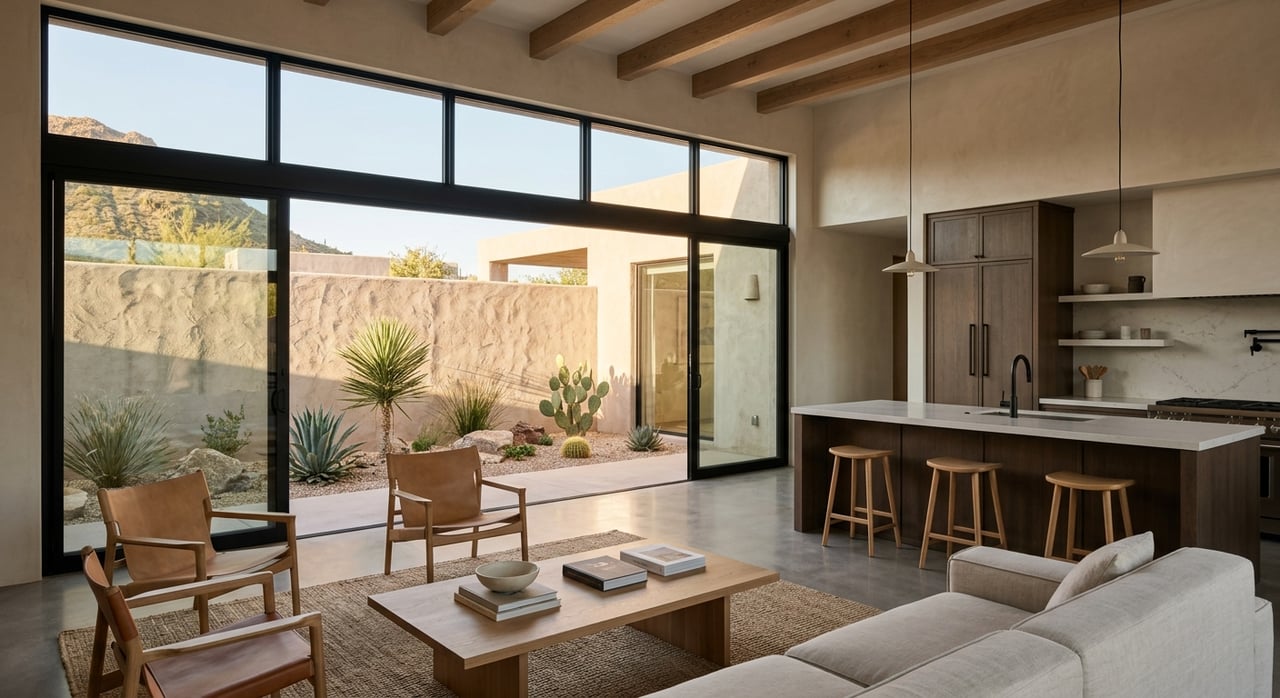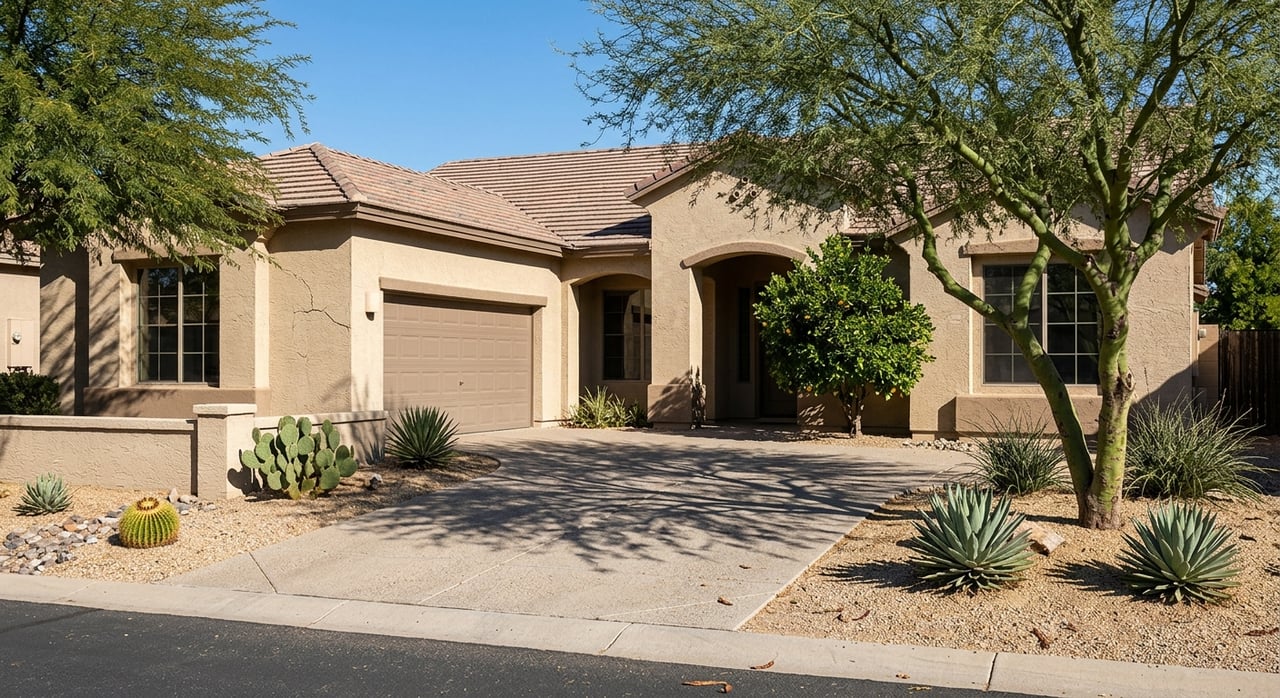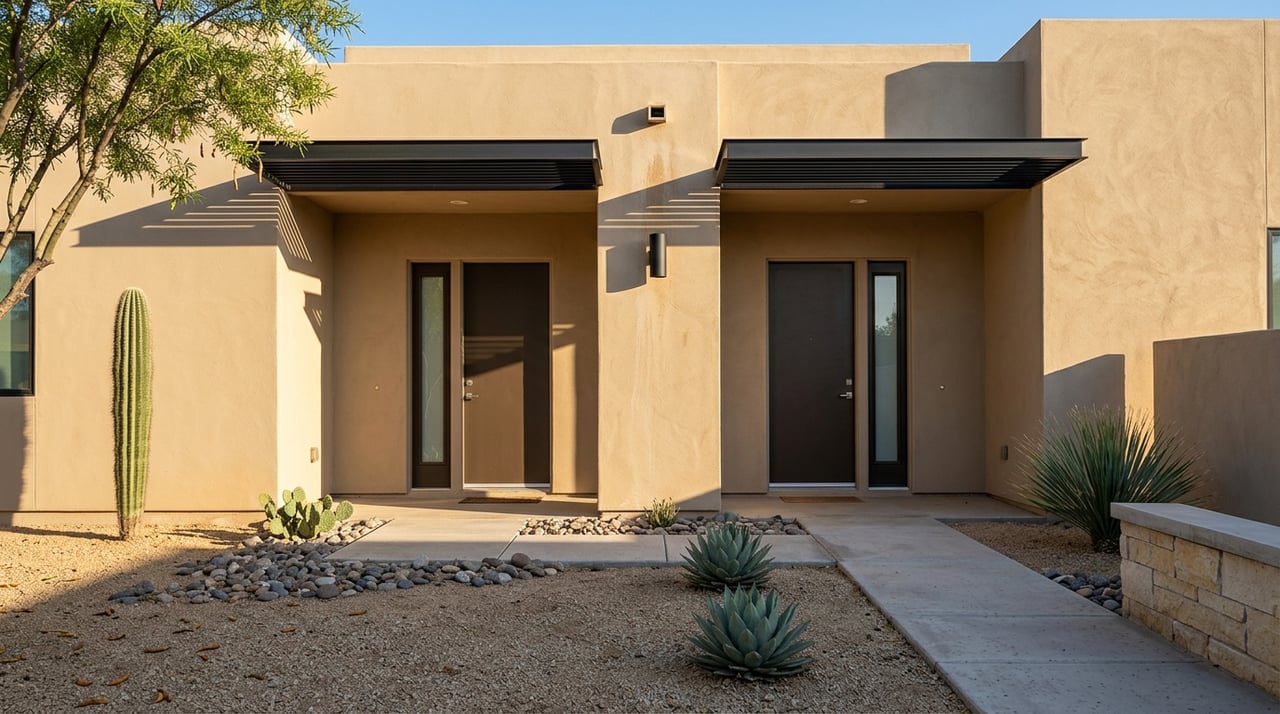
Are you better off buying one Peoria rental house or spreading your risk across a duplex or triplex? It is a smart question, especially in a market where both rents and purchase prices can make or break your numbers. If you are weighing detached rentals against small multifamily in Peoria, this guide will help you compare pricing, rent potential, management demands, and local strategy fit. Let’s dive in.
Peoria investor backdrop
Peoria offers a mix that gets a lot of investors’ attention. The city’s 2025 population estimate is 200,881, median household income is $95,815, and 76.0% of housing is owner-occupied. That points to a suburban market with strong owner demand and a large pool of households that may also support rental demand.
At the same time, the cost side matters just as much as the rent side. Peoria’s median owner-occupied home value is $463,600, and Redfin reported a median sale price of $529,683 for the three months ending May 2026, with homes selling in about 55 days. In other words, this is not a market where you can assume easy cash flow just because rents look solid on paper.
What small multifamily means here
Before comparing property types, it helps to define the term. In the broader housing world, “small multifamily” can mean different things depending on the source. For this Peoria discussion, the most useful investor shorthand is duplexes, triplexes, and fourplexes.
That matters because some industry sources use the term for larger 5-to-49-unit buildings. If you are shopping Peoria opportunities with a local investor mindset, you will usually be comparing a rental home against a 2-to-4-unit property. Keeping that definition clear helps you compare apples to apples.
Peoria rental home numbers
For detached rentals, Zillow shows an average Peoria house rent of $2,295 per month. Active examples ranged from about $1,945 for a 3-bedroom, 2-bath house to $4,500 for larger 4-bedroom homes. That is a wide spread, which tells you location, size, and condition matter a lot.
On the acquisition side, the broad citywide median sale price of $529,683 is a useful benchmark for the competition detached-rental investors face. It is not a single-family-only number, but it still gives you a sense of the pricing environment. If you are targeting a rental house in Peoria, your cash flow will likely depend on finding the right pocket of the city and avoiding overpaying for finish level or lot premium that does not add much rent.
Peoria small multifamily numbers
Small multifamily inventory in Peoria appears much thinner than the supply of rental houses. Zillow duplex and triplex search results were limited and more episodic, which suggests you may not see as many clean, ready-to-go options at any one time. That lower visible supply can make deal sourcing less predictable.
The active Peoria duplex and triplex listings shown on Zillow were mostly clustered in the low-$200,000s, with several examples roughly between $220,000 and $265,000. There were also a few much larger listings at about $1.35 million and $2.6 million. That wide range shows why you need to underwrite each property on its own merits instead of assuming all small multifamily in Peoria fits one price band.
For rent context, Zillow shows Peoria 3-bedroom apartment asking rents from about $1,395 to $2,499+, and its rental manager page lists an average 3-bedroom apartment rent of $2,200. That means a duplex or triplex unit may not command much more rent per unit than a detached house on a headline basis. The advantage is often the ability to collect income from multiple leases on one property.
Rental homes vs small multifamily
Detached rentals: simpler operations
A single-family rental often appeals to investors who want a more straightforward setup. You usually have one lease, one household, and fewer moving parts day to day. In a suburban market like Peoria, that can be a strong fit if you want a less hands-on ownership experience.
There is also a demand-side reason detached rentals stay attractive. Brookings notes that single-family rental residents are more likely to be families with children than multifamily renters, and institutional investors often target suburban markets with strong job growth and low supply relative to demand. That lines up reasonably well with Peoria’s suburban profile.
Small multifamily: more income diversification
A duplex, triplex, or fourplex offers something a single house cannot. If one unit goes vacant, you may still have rent coming in from the other units. That can make income feel more diversified at the property level.
But diversification does not mean easier ownership. With multiple units, you also take on more leases, more turnover points, and more shared systems to monitor. In many cases, the extra income opportunity comes with more operational complexity.
Why maintenance matters more than many expect
This is one of the biggest differences between the two property types. Research from the Terner Center found that small multifamily properties are older on average than large apartment buildings, 28% were rated fair or poor by owners, 25% of owners postponed some maintenance, and 20% did not conduct regular unit inspections. That is a useful warning sign for investors looking at value-oriented 2-to-4-unit properties.
In Peoria, many small multifamily opportunities may be older assets rather than brand-new construction. A duplex or triplex can create some efficiencies per parcel, but it can also concentrate roof, plumbing, exterior, and system risk across multiple tenants. If you buy one with deferred maintenance, the repair budget can escalate fast.
A detached rental can still need work, of course. The difference is often scope and intensity. With one household and one unit, the maintenance rhythm may be easier to plan for, especially if your strategy is to hold a cleaner, newer home in a stronger submarket.
Vacancy and rent-growth caution
If your plan depends on fast rent growth, it is worth slowing down and underwriting conservatively. Northmarq reported Greater Phoenix multifamily stabilized vacancy at 7.5% at the end of 2025, along with full-year rent declines of 2.3%. The Peoria/Sun City submarket did show a 130-basis-point year-over-year vacancy improvement, but that is still a backdrop that calls for discipline.
For Peoria investors, this means you should be careful with pro formas that assume easy lease-up or aggressive rent bumps. That is especially true for duplexes and triplexes where multiple vacancies can hit at once. Strong reserves and realistic timelines matter more than optimistic spreadsheets.
Submarket selection can change the deal
In Peoria, the zip code can materially change your investment case. Zillow’s Peoria ZIP-level home-value estimates ranged from about $366,791 in 85345 to $639,926 in 85383. That kind of spread can dramatically affect your entry price, rent strategy, and long-term hold math.
This is why the best choice is rarely about property type alone. A solid rental house in one part of Peoria may outperform a tired duplex in another area, even if the duplex looks cheaper upfront. The reverse can also be true if the multifamily property is well bought, well located, and in better condition than competing inventory.
Which strategy fits your goals?
Choose a rental home if you want:
- One lease and simpler day-to-day management
- A suburban tenant profile that often aligns with detached housing demand
- A cleaner hold strategy with fewer shared systems
- An easier starting point if you are newer to landlording
Choose small multifamily if you want:
- Multiple income streams from one property
- Exposure to duplex, triplex, or fourplex value-add opportunities
- More diversification against a single vacancy event
- A more hands-on investment approach
A practical Peoria decision framework
If you are comparing a detached rental with a duplex or triplex, focus on the numbers that actually shape performance. In Peoria, rent alone does not tell the whole story. Acquisition price, property condition, reserves, and submarket quality can outweigh the headline monthly rent.
Start with these questions:
- What is the realistic all-in acquisition cost?
- How much immediate repair or deferred maintenance is visible?
- How conservative are your vacancy and rent-growth assumptions?
- Does the asset type match how hands-on you want to be?
- Is the property in a Peoria pocket where the rent and resale story both make sense?
For many investors, detached rentals work best when you want simplicity and a more straightforward hold. Small multifamily tends to make more sense when you are comfortable with older housing stock, more moving parts, and a management-heavy strategy in exchange for multiple rent streams.
In a market like Peoria, the winning move is usually not picking a category in the abstract. It is finding the right property, in the right submarket, at the right basis, with realistic reserves and expectations. If you want help comparing live Peoria opportunities and pressure-testing the numbers, Robert Tolnai can help you sort through the options with a practical local lens.
FAQs
What does small multifamily mean for Peoria investors?
- In this Peoria context, small multifamily usually means duplexes, triplexes, and fourplexes rather than larger apartment properties.
What are average Peoria rents for rental homes?
- Zillow shows an average Peoria house rent of $2,295 per month, with active listings ranging from about $1,945 to $4,500 depending on size and condition.
How do Peoria duplex and triplex prices compare with houses?
- Visible duplex and triplex listings on Zillow were mostly in the low-$200,000s, while the broader Peoria median sale price reported by Redfin was $529,683, though each asset type should be analyzed individually.
Are Peoria small multifamily properties harder to manage?
- They can be, especially because small multifamily stock is often older and may involve more deferred maintenance, multiple leases, and more shared systems.
Is Peoria a good market for detached rentals?
- Peoria’s suburban profile, household income, and rental pricing make detached rentals worth considering, but your results will still depend heavily on purchase price, condition, and submarket selection.
What matters most when comparing Peoria investment properties?
- The key factors are acquisition cost, realistic rent, condition, reserves, vacancy assumptions, and the strength of the specific Peoria submarket.