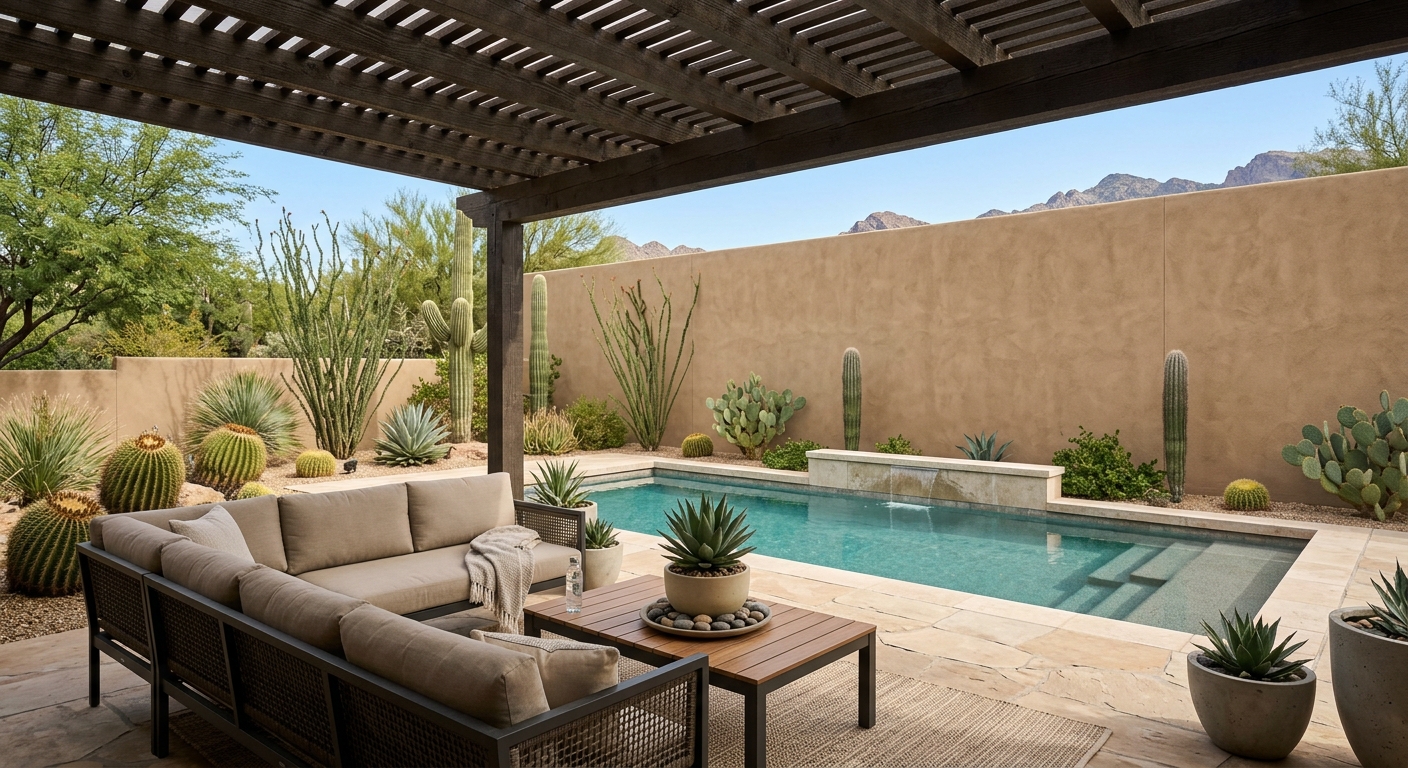
If your backyard looks great in photos but feels too hot to use for half the year, you are not alone. In Peoria, outdoor living spaces have to do more than look nice. They need to handle intense sun, low humidity, and long stretches of triple-digit heat. The good news is that smart design can make your yard more comfortable, easier to maintain, and more appealing when it is time to sell. Let’s dive in.
Start With Peoria’s Climate
Design choices in Peoria should begin with heat, not decor. Nearby Phoenix Deer Valley climate normals show average daily highs of 101.5°F in June, 104.0°F in July, and 102.5°F in August, with annual precipitation of just 8.90 inches.
The broader Phoenix climate pattern tells the same story. Normal highs stay above 100°F from early June through early September, many summer days rise above 110°F, and humidity is very low. That means your outdoor space needs a plan for shade and surface temperature before you think about finishing touches.
Put Shade First
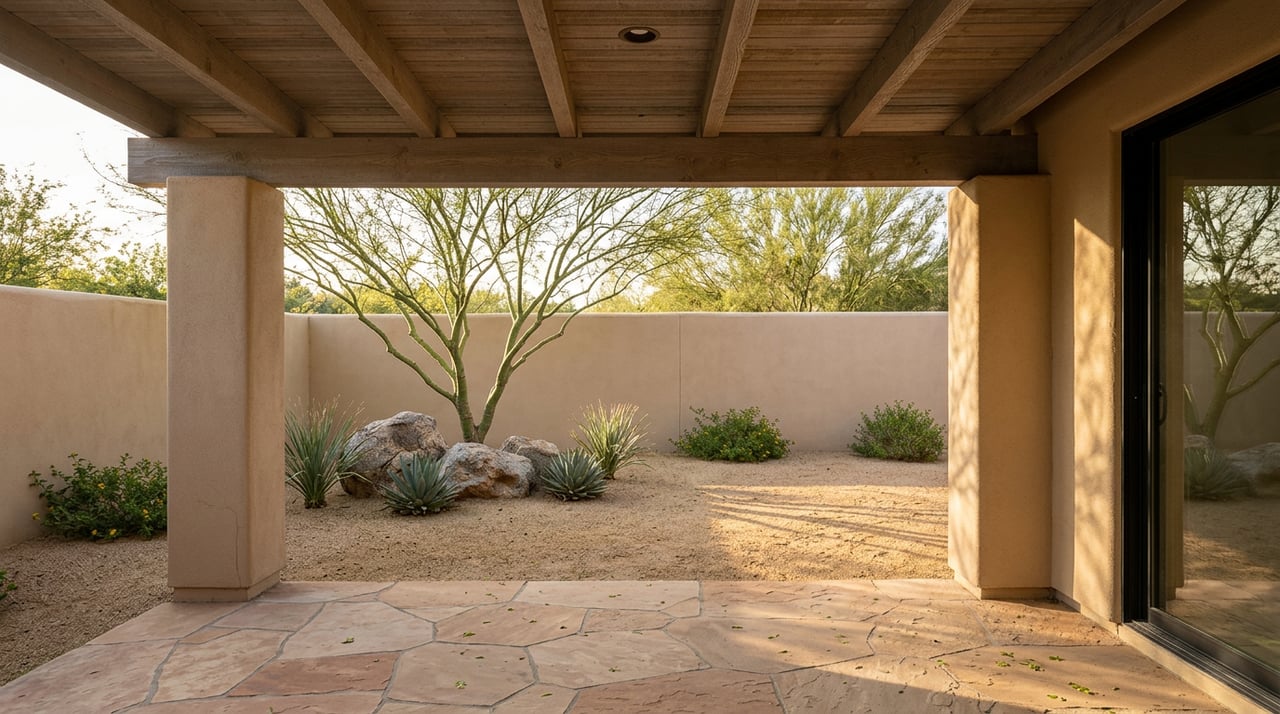
If you want a backyard that actually gets used, shade should be your first priority. In a climate like Peoria’s, it gives you the biggest comfort boost right away.
The most practical starting points are:
- Covered patios
- Pergolas
- Retractable or fixed awnings
- Shade trees placed with purpose
The U.S. Department of Energy notes that awnings can shade outdoor living spaces, and window awnings can reduce solar heat gain by up to 65% on south-facing windows and 77% on west-facing windows. That west-facing exposure matters in Peoria because late-afternoon sun is often the toughest part of the day.
Why West Shade Matters
A backyard may feel manageable in the morning and harsh by late afternoon. That is why the west side of the home and yard deserves extra attention when you plan patio covers, shade sails, trees, or seating zones.
The EPA reports that trees and vegetation cool spaces through shade and evapotranspiration. Shaded surfaces can be 20°F to 45°F cooler than surfaces in full sun. For cooling impact, west-side deciduous trees are often the most effective placement.
Build Layers of Comfort
A usable backyard in Peoria usually works best when it has more than one cooling strategy. Shade does the heavy lifting, but airflow and small comfort upgrades can help you use the space more often.
A strong setup often includes a covered patio or pergola, at least one well-placed shade tree, and an add-on like a ceiling fan or misting line. This layered approach is more effective than trying to make an open patio comfortable in direct sun.
Are Misters Worth It?
In Peoria’s hot, dry air, misters can make a seating area feel better under a covered patio. They work best as a secondary feature, not as your main heat solution.
Because Arizona water use matters, misters should be part of an efficient plan rather than the starting point. It is smarter to prioritize shade, airflow, and durable design first, then add misters if they fit your layout and maintenance goals.
Choose Landscaping That Fits Arizona
A beautiful yard in Peoria does not have to mean high water use or constant upkeep. In fact, the Arizona Department of Water Resources says landscaping is the largest use of potable water in Arizona, and as much as 70% of residential water use happens outdoors.
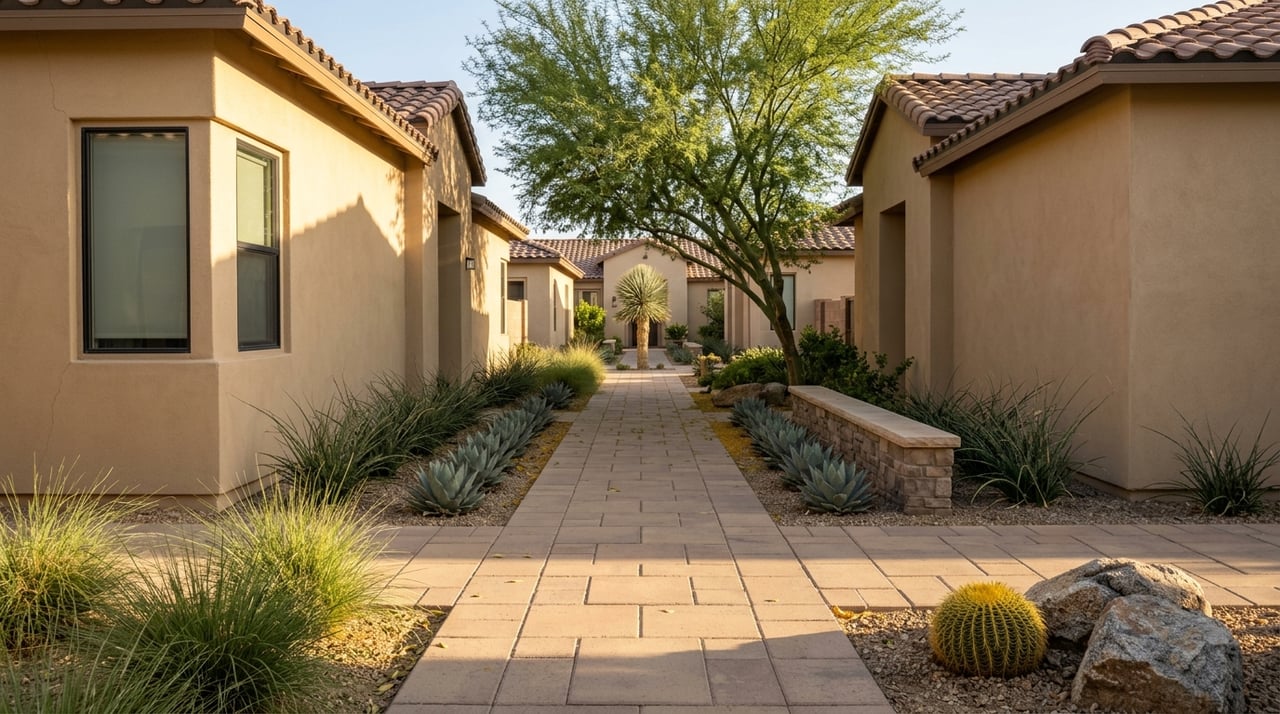
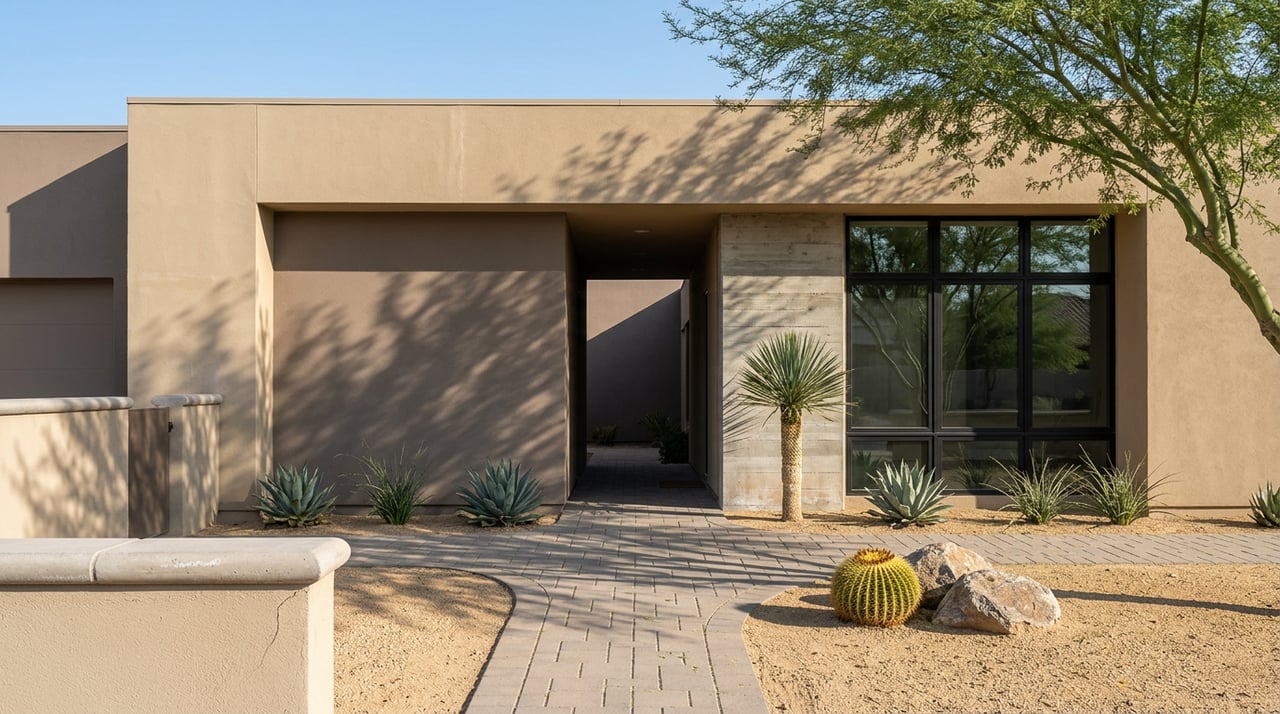
That is why desert-adapted design makes so much sense here. It can help you cut maintenance, lower water demand, and create a cleaner layout for outdoor living.
Smart Low-Water Features
ADWR recommends efficient design, regionally appropriate plants, and water-conscious irrigation practices. Their guidance also supports xeriscape methods, drip irrigation, seasonal watering schedules, rainwater harvesting, and gray water as useful tools.
For many homeowners, that translates into a yard with:
- Drought-tolerant plants
- Drip irrigation instead of broad spray systems
- Smaller turf areas
- Defined patios and planters
- Wider circulation paths between seating and activity areas
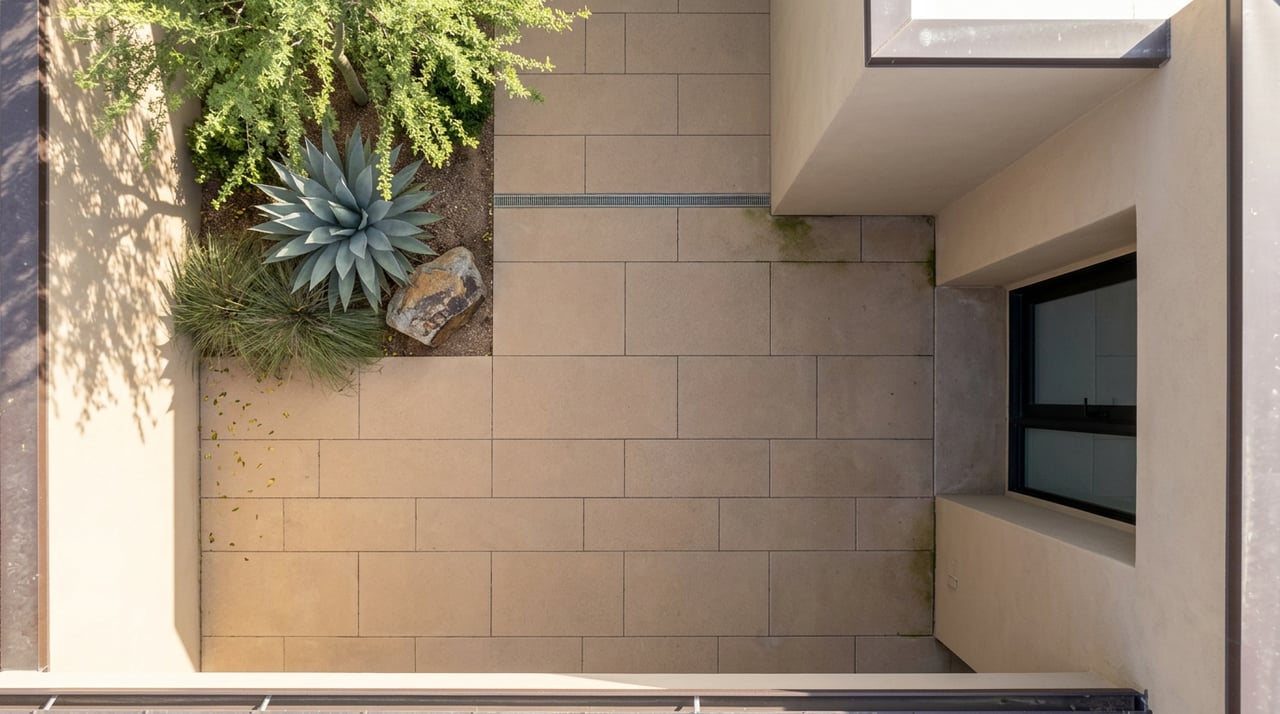
ADWR also notes that removing grass can make room for patios and planters. That can be a smart move if your goal is to create more usable outdoor living space while keeping the yard easier to care for over time.
Pick Cooler Hardscape Materials
In Peoria, the ground under your feet matters just as much as the furniture you choose. Dark, exposed surfaces can store a lot of heat and make a yard feel hotter than the air temperature suggests.
EPA cool pavement guidance points to a useful comparison from an Arizona pilot study. Conventional asphalt reached 152°F at midday, while cool pavements were 10°F to 16°F cooler. That supports choosing lighter pavers, stone, or other cooler-feeling surfaces around patios, walkways, and pool decks.
Better Surface Options for Heat
When you plan hardscape, consider materials that support comfort instead of fighting it. Lighter finishes and shaded surfaces generally feel better than dark, exposed paving.
Good options to explore include:
- Light-colored pavers
- Stone with lower heat absorption
- Cooler pavement products where appropriate
- Permeable paving for runoff support
The key idea is simple. A stylish backyard is great, but a backyard you can walk across comfortably in summer is better.
Plan Pools With Safety in Mind
Pools are a popular outdoor feature in the West Valley, but in Arizona they also come with specific legal requirements. If you are designing a new pool area or reworking an existing backyard, pool safety barriers need to be part of the early plan.
Arizona law requires residential pools and other contained bodies of water intended for swimming to be protected by an enclosure when they are at least 18 inches deep and wider than 8 feet. Under Arizona Revised Statutes § 36-1681, the barrier must be at least five feet high and include code-compliant gates and anti-climb details. If the residence forms part of the enclosure, the law allows alternative protections.
Why Pool Layout Matters
A pool is not just a visual centerpiece. It affects circulation, gate placement, sight lines, deck space, and how the rest of the yard functions.
That means pool planning should happen alongside patio, fencing, and landscaping decisions. It is much easier to create a backyard that feels cohesive when safety and traffic flow are built into the design from the start.
Think About Resale Too
Outdoor upgrades are personal, but they can also support resale appeal. Buyers in Peoria often notice whether a backyard feels usable, shaded, and easy to maintain.
The National Association of Realtors reported that homeowners often complete outdoor projects for enjoyment, curb appeal, and resale value. In its 2023 Remodeling Impact Report, estimated cost recovery reached 100% for an overall landscape upgrade, 95% for a new patio, and 100% for an outdoor kitchen.
Features Buyers Notice
Not every project has to be large to make an impression. In many cases, comfort and simplicity matter more than adding every possible upgrade.
Features that tend to stand out include:
- Strong shade coverage
- Lower-maintenance desert landscaping
- Cooler patio and deck materials
- Clean traffic flow around seating areas
- Pool layouts that feel safe and intentional
When a backyard looks attractive and feels practical, it is easier for buyers to imagine using it every day.
A Simple Peoria Backyard Strategy
If you are deciding where to start, keep the order simple. In Peoria, the best outdoor spaces usually begin with climate reality and then build outward.
A practical path looks like this:
- Add or improve shade first
- Choose cooler walking and patio surfaces
- Replace high-maintenance turf with lower-water landscaping where it makes sense
- Add comfort extras like fans or misters
- Plan pool barriers and layout early if a pool is involved
This kind of approach can help you avoid spending money on features that look good but do not solve the biggest problem. In our market, that biggest problem is usually heat.
If you are preparing your home for sale or thinking about updates that make day-to-day living better, outdoor design is one of the smartest places to focus. And if you want a local perspective on which improvements are likely to help your home stand out in Peoria, connect with Robert Tolnai for practical guidance tailored to your property and goals.
FAQs
What should come first when designing an outdoor living space in Peoria?
- Shade should come first because Peoria’s extreme summer heat makes covered areas, awnings, and trees the most direct way to improve comfort.
What outdoor surfaces stay cooler in a Peoria backyard?
- Lighter pavers, stone, cool pavement products, and shaded hardscape areas are generally better choices than dark, exposed surfaces.
What is a low-maintenance landscape option for Peoria homes?
- A low-maintenance approach usually includes desert-adapted plants, drip irrigation, smaller turf areas, and more space for patios or planters.
What should homeowners know about pool barriers in Arizona?
- Arizona law generally requires a compliant enclosure for residential pools and certain other contained bodies of water intended for swimming, including height, gate, and anti-climb standards.
Do outdoor living upgrades help resale in Peoria?
- Outdoor upgrades can support resale appeal, especially when they improve comfort, curb appeal, and ease of maintenance through features like patios, landscaping, and outdoor kitchens.