Most buyers walk into a Peoria inspection worried about what the inspector will find. That's the wrong worry. The Arizona Association of REALTORS contract gives you ten days to inspect, respond, and decide, and those ten days count Christmas, Thanksgiving, and every Sunday in between. In a market where sellers are already cutting prices, the buyers who protect their leverage are the ones who treat the calendar as the deal, not the defect list.
That's the thesis of this post. Peoria's 2026 market has handed buyers real negotiating room, but the inspection period is shorter and less forgiving than most first-time buyers realize, and the desert-specific defects that show up in inspection reports here take time to price out. Front-load the schedule or forfeit the leverage.
The 10-Day Clock Doesn't Care What Month It Is
The default Arizona Residential Resale Real Estate Purchase Contract gives buyers a 10-day inspection period, followed by a 5-day seller response window and a 5-day buyer election window. Agents call it the 10/5/5. The standard Arizona resale contract gives the buyer a 10-day inspection period, and everything BINSR-related hangs off that window, followed by two 5-day response periods.
Here is the part that catches Peoria buyers off guard. Section 8h of the contract defines days as calendar days, and the document does not create a carve-out for Christmas or other holidays, so Christmas Day and Christmas Day Observed are both included in the 10-day inspection period. The Arizona Association of REALTORS published this opinion after a real dispute: a December 15 contract with a BINSR delivered on December 27 was ruled late. The buyer lost the right to request repairs.
That matters in Peoria for two reasons. Snowbird contracts cluster from November through January, running the clock straight through the holidays. And summer contracts collide with the exact months when local HVAC and roofing calls spike, making it harder to get an inspector or a specialist bid on short notice.
What Peoria Inspectors Actually Flag
The desert isn't a metaphor here. It's a stack of physical stresses that produce a predictable set of findings, and pricing them out requires more than a general inspection.
| Common finding | What triggers it in Peoria | Why the timeline gets tight |
|---|---|---|
| Tile roof underlayment failure | Underlayment lifespan of 20 to 25 years under intense sun | Requires a roofer, not just a general inspector, to bid |
| Undersized or aging AC | Attic temperatures exceeding 150°F in summer, plus systems oversized for mild-climate homes | HVAC bids in July can take a week |
| Stucco cracking | Thermal expansion and contraction | Cosmetic vs structural triage needs a specialist |
| Subterranean termites | Standard risk across the Sonoran Desert | Separate WDIIR inspection required |
| Attic insulation below R-38 | Common in older Peoria stock | Documenting adds cost projections to the BINSR |
| Drainage and grading failures | Monsoon runoff and irrigation overspray | Foundation implications need engineer sign-off |
The AC issue is the one that has cost the most Peoria buyers real money. A couple who relocated from the Pacific Northwest closed on a home whose AC had never been flagged, then spent their first Arizona summer watching utility bills climb because the AC system was significantly undersized for the square footage, working itself to death every day. A mild-climate inspector's report wouldn't have caught it. A Peoria specialist would.
Stucco is the other trap. Some cracking is completely normal because Arizona's extreme temperature swings cause thermal expansion, and cosmetic cracks can be repaired with caulking and paint, but wide cracks over 1/4 inch, stair-step cracks that follow mortar joints, or cracks around windows and doors can indicate foundation issues, improper installation, or water intrusion. Sharpline Inspection, one of the Peoria firms working the exterior side of the market, also watches for stucco bulges that signal water trapped behind the finish. That's a five-figure repair on the wrong house. A one-tube-of-caulk fix on the right one. Only a specialist can tell you which you're looking at, and that specialist needs to get out there before day seven.
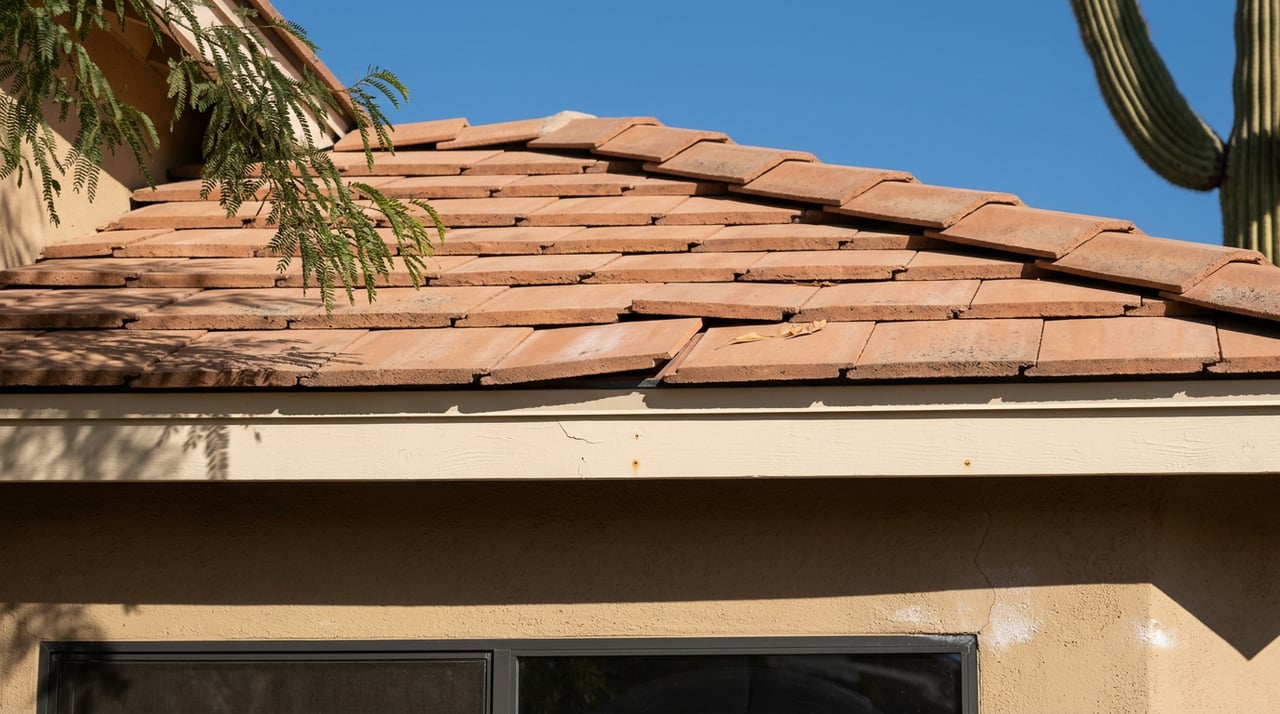
Tile roofs are the third. Many Arizona homes have tile roofs that look perfectly fine from the outside, but the underlayment beneath the tiles has a lifespan of 20 to 25 years. If you're buying anywhere in the older Peoria stock near Old Town or in the earlier Vistancia phases, a drone roof inspection or a specialist walk is worth the extra day it costs you.
Termites deserve their own line item. Arizona has subterranean termites, and a licensed pest inspector is not a nice-to-have. Local inspection firms including Desert State Home Inspections, which has operated in Peoria since 1999, and Vertex Property Inspections both handle WDIIR reports as a separate service. Desert State Home Inspections released a Hidden Defects Report for Peoria in June 2026 built on over 25 years of inspection data compiled from more than 25,000 completed inspections across the Phoenix metro area.
Why Your Leverage Looks Different Than It Did In 2024
Here is where the market math changes the BINSR math. Two years ago, a Peoria buyer asking for a $12,000 roof credit got laughed at. In 2026, that same request lands differently.
The median Peoria sale price in March 2026 was $540,000 with homes selling for 98.16 percent of asking price and spending 52 days on the market. That statistic alone reads like a balanced market. Look one line down and the picture sharpens. The share of Peoria homes with price reductions increased from 1.13 percent to 36.6 percent year over year. More than a third of listings are cutting price before they sell. Orchard's data for the trailing 30 days pushes further: 52.54 percent of homes listed dropped in price, up 13.3 points from last year.
Translated into BINSR language: a seller who refuses a reasonable repair request in this market is choosing between fixing a $6,000 problem and re-listing into a pool where every second listing is already cutting price. The pool has grown, and the ZIP-code splits matter. Homes in 85383, which covers Vistancia and Trilogy at Vistancia, are sitting closer to 96 days in some pockets. A buyer holding a signed contract on a 85383 home has more room to ask than the raw citywide median suggests.
What that leverage looks like in practice:
- Ask for repair credits rather than seller-performed repairs when you want control over the contractor
- Combine credit requests with specific line items: "Seller to credit $X toward roof underlayment replacement based on attached licensed contractor bid"
- Request an escrow holdback when a repair can't finish before close of escrow
- Ask for documentation, permits, or warranties on any recent work the seller claims was done
- Attach photos and inspection excerpts to every request so the seller's agent can price it fairly
None of that leverage exists if you deliver the BINSR on day ten with no contractor bids attached.
A Working Peoria Inspection Timeline
The 10-day period is a workflow, not a deadline. Treat it like one.
- Day 1: Book the general inspection, termite (WDIIR), roof, HVAC, and pool inspections in a single afternoon. Confirm inspector availability before you sign the contract if you can.
- Days 2 to 4: General inspection occurs. Read the report the same day it arrives.
- Days 3 to 6: Specialist follow-ups scheduled. Roofer walks the tile. HVAC tech pulls tonnage and service records. Stucco specialist called only if the general inspector flagged movement patterns.
- Days 5 to 7: Collect written bids on anything over $2,500. Bids are your BINSR ammunition.
- Day 7 or 8: Draft the BINSR. Separate safety and structural items from cosmetic ones. Sellers agree to the first category and refuse the second.
- Day 9 or 10 by 5:00 PM Arizona time: Deliver the BINSR. The contract specifically states that all desired Inspection Period inspections and investigations must be conducted prior to delivering the notice, and all due diligence items disapproved are to be provided in a single notice. You get one shot.
The seller then has five days to respond, and you have five days after that to accept or cancel with earnest money returned. Miss the day-ten deadline and the entire right to request or cancel evaporates.
Where Peoria Sellers Actually Lose Deals
Sellers reading this: the same calendar cuts both ways. In a market where a third of listings are already reducing price, a deal that falls apart at BINSR often doesn't come back at the same number. Pre-listing inspections are more common now for a reason. If you find the AC problem before the buyer's inspector does, you decide whether to fix it, credit it, or price it in. If the buyer's inspector finds it on day four of the 10-day clock, the buyer decides.
The Peoria homes closing cleanly in 2026 tend to share three seller behaviors: a pre-listing inspection with any major items addressed or disclosed, a roof and HVAC service history handed over with the SPDS, and a willingness to respond to the BINSR within 48 hours rather than burning the full five days.
FAQ
If my inspection period ends on a Sunday, do I get Monday? No. The AAR has been clear that calendar days govern the inspection period. Deliver the BINSR by 5:00 PM Arizona time on the tenth calendar day regardless of what day of the week it falls on.
Can I ask for both repairs and a credit on the same item? You can request one or the other, or combine categories across different items. You can ask the seller to repair a safety issue while requesting a credit for a system replacement you'll manage after closing. Keep seller concessions on the standard contract addendum rather than the BINSR itself.
Does my lender need to approve BINSR credits? Credits count against seller concession limits, which vary by loan type. Confirm with your lender before you commit to a credit structure. Some lender-required repairs must be completed before funding, which affects whether a credit is even an option.
Is a pre-listing inspection worth it for a Peoria seller? In a market where 36.6 percent of Peoria listings already reduce price before selling, catching a $4,000 problem in advance is usually cheaper than losing a buyer over it during the 10-day period. It also lets you price the home honestly rather than absorbing a surprise credit at day fifteen.
Buying or selling in Peoria this season and want a real read on how a specific home might inspect before you write the offer or list the property? Sold With Robert has walked the 10/5/5 clock more times than most agents in the West Valley, and we're happy to talk through the calendar, the likely findings, and the leverage you actually have. Call Robert today for a free home market consultation.